Philadelphia to Newark Airport: Amtrak vs. Private Car Service

Choosing ground transportation between Greater Philadelphia and Newark Liberty International Airport involves analyzing speed, comfort, and actual costs. Many travelers default to regional rail networks without considering modern terminal logistics. Private chauffeured transport offers an alternative that bypasses public transit delays. Real travel data reveals distinct differences between these two options.
Transit Overview: Direct Data Comparison
The multi-state corridor between Philadelphia and Newark Airport requires strict timing management. Public transit and private transit solve this travel challenge in completely different ways.
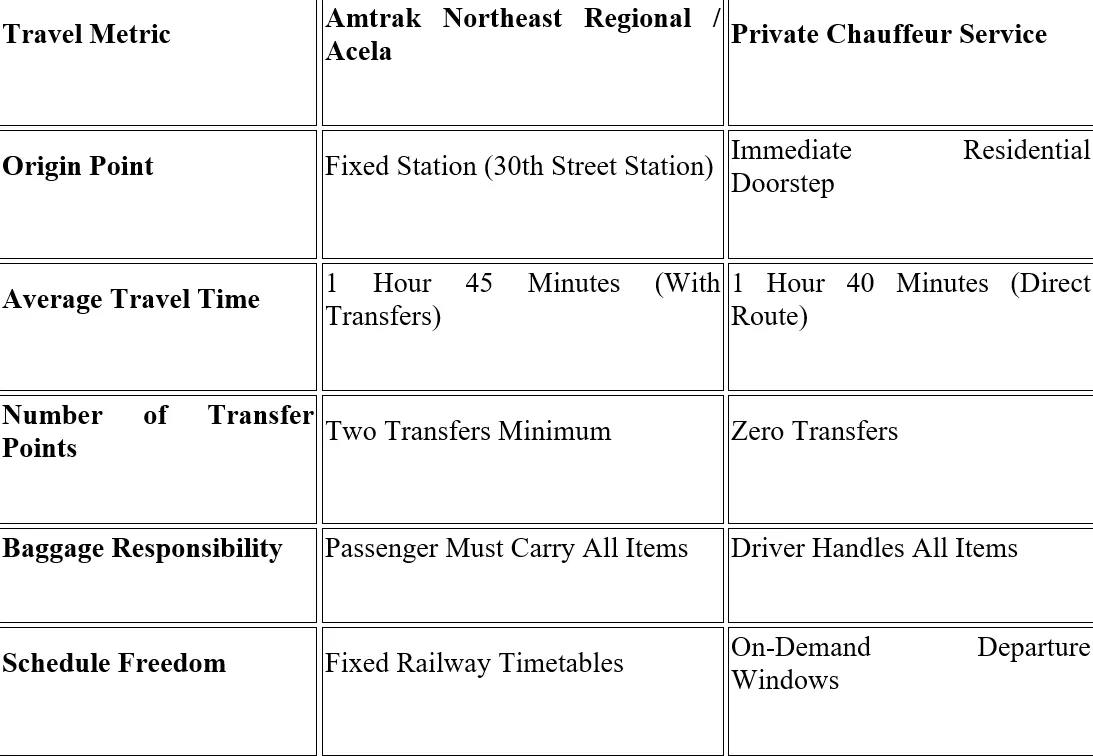
Rail travel demands rigid alignment with train operator timetables. Chauffeured transport aligns completely with individual flight itineraries.
Travel Time Predictability: Fixed Rail vs. Interstate Highway
Predictability remains a primary factor for airport commutes. Missing a departure window due to transit delays results in massive financial losses.
Amtrak Timetables from 30th Street Station
Trains depart from Philadelphia’s William H. Gray III 30th Street Station at scheduled intervals. Amtrak Acela transit time options appear fast on paper. The train ride to the airport station takes roughly one hour. Passengers must still travel from their homes to 30th Street Station first. Local traffic can delay that initial connection. Waiting on train platforms adds unrecoverable time to the itinerary.
Interstate 95 and New Jersey Turnpike Variables
Highway travel covers approximately 90 miles from Center City to EWR. Drivers utilize Interstate 95 and the New Jersey Turnpike. Highway congestion can occur during morning and evening rush hours. Professional dispatch teams constantly monitor these lanes. Experienced drivers adjust routes in real time to avoid bottlenecks. Private vehicles depart from residences early enough to absorb unexpected roadway incidents. This strategy guarantees arrival before check-in counters close.
Navigating EWR Infrastructure: The AirTrain Construction Impact
Airport infrastructure changes heavily influence travel times. Modernization projects at Newark Liberty International Airport currently alter standard arrival procedures.
Weekday Monorail Suspensions and Shuttle Bus Realities
The Port Authority is currently executing a $3.5 billion AirTrain Newark Replacement Program. This massive infrastructure upgrade creates significant weekday transit outages. AirTrain service to and from the main airport train station is suspended on weekdays. The outage runs Monday through Friday from 5:00 AM to 3:00 PM.
Passengers arriving via Amtrak cannot ride the monorail directly to flights. Travelers must board Port Authority shuttle buses instead. These buses mix with standard airport traffic outside the station. The bus transfer adds 15-45 minutes of extra travel time. Peak construction windows can push shuttle delays to up to an hour.
Eliminating Failure Points with Direct Curbside Drop-off
Train travel introduces multiple logistical failure points during these construction periods. Passengers must load bags onto the train, off the train, and onto a shuttle bus. Private vehicle transport completely avoids this multi-modal stress. Dedicated drivers navigate directly to terminal ground transportation zones. Chauffeurs drop passengers off right at the terminal check-in doors.
Vehicles serve Terminals A, B, and C without using airport shuttles. Roadway pavement rehabilitation work causes minor nightly lane closures around the airport. Chauffeurs adapt to these nightly detours instantly. Rail passengers remain stuck on fixed bus routes managed by the airport.
Baggage Management and Passenger Comfort
Physical energy expenditure impacts overall travel satisfaction. Luggage logistics present a major hurdle for public transportation users.
The Physical Strain of Platform Transfers
Carrying oversized luggage through public train stations can cause significant fatigue. Amtrak passengers must lift bags onto overhead racks or storage areas. Travelers then maneuver those bags down narrow train aisles during stops. Navigating stairs, escalators, and turnstiles with heavy suitcases increases personal stress. The challenge grows worse when traveling with young children or elderly family members. Public platforms provide very little shelter during inclement East Coast weather.
Fleet Space and Comfort Factors
Private transport turns the commute into a quiet mobile office. Chauffeurs handle all heavy lifting at the residence doorstep. Luggage rests securely inside the private vehicle trunk. Passengers choose from a curated fleet designed for specific group sizes. Executive sedans provide quiet cabins for individual corporate managers. Premium SUVs offer expansive space for larger families with extensive baggage. Luxury Sprinter vans accommodate corporate teams easily. Passengers relax in climate-controlled cabins with dedicated device charging ports.
Cost-Benefit Analysis: Per-Passenger Rail Fares vs. Private Rates
Evaluating travel budgets requires analyzing total expenditures rather than single ticket costs. True travel pricing involves several hidden variables.
The Cost-Per-Passenger Break-Even Calculation
Amtrak ticket prices fluctuate based on booking times and passenger volume. Peak-hour Northeast Regional or Acela tickets are expensive. Buying individual tickets for a group of three or four passengers adds up quickly. The combined ticket cost often matches the flat rate of a premium vehicle. For comprehensive pricing insights on this route, review the detailed breakdown of the limo service from Philadelphia to Newark Airport. A private ride spreads the expense across the entire group, maximizing financial efficiency.
Hidden Expenses of Rail Station Commutes
Rail travel includes secondary costs that passengers frequently overlook. Travelers must pay for parking at 30th Street Station or for local rideshare connections to 30th Street Station. Multi-day parking at metropolitan rail hubs accumulates major fees. Amtrak tickets do not include terminal delivery charges during weekday monorail outages. Private transit rates include upfront interstate tolls and bridge fees. Corporate travelers receive a single, transparent invoice for simple expense tracking. This clarity eliminates surprise line items later.
Frequently Asked Questions
Does Amtrak drop passengers off directly at the Newark Airport flight terminals?
No. Amtrak trains stop at the Newark Liberty International Airport Rail Station. Passengers must transfer to airport shuttle buses during weekday construction hours to reach terminals.
How much additional travel time must be allocated for the EWR shuttle bus?
Travelers should budget an additional 30 to 60 minutes for the shuttle bus transfer. Port Authority construction projects limit monorail access on weekdays between 5:00 AM and 3:00 PM.
What is the most reliable transit option for early morning international departures?
Private car service offers the highest reliability for early-morning flights. Chauffeurs depart at exact times, while overnight rail schedules remain highly restricted.
How do private car services handle flight delays for incoming arrivals at EWR?
Advanced flight tracking software monitors all incoming flights in real time. Drivers adjust their arrival window automatically based on actual aircraft landing times.