Category

Technology & IT

Comprehensive discussions and expert insights revolving around technology & it trends and best practices.

May 30, 2026 186 Reads

Which Solar Solutions Are Best for Australian Businesses?

Australian businesses are increasingly searching for smarter ways to manage rising electricity costs and improve long-term sustainability. As energy prices continue to fluctuate, many organisations are turning to renewable energy systems that provide stability, efficiency, and lower operating expenses. This growing demand has also increased interest in reliable companies with solar panels that can deliver tailored solutions for different industries and business sizes.From small retail stores to large commercial facilities, solar energy is transforming the way Australian businesses operate. Choosing the right solar solution can significantly reduce electricity bills, improve energy independence, and support environmental goals. Businesses on the Gold Coast and across Queensland are now exploring advanced solar technologies, battery storage systems, and off-grid options to future-proof their operations.Why Australian Businesses Are Investing in Solar EnergyCommercial electricity costs in Australia have steadily increased over the years, putting pressure on businesses to find alternative energy solutions. Solar power has become one of the most practical and cost-effective investments for companies looking to reduce overhead expenses.According to the Australian Government’s Clean Energy Regulator, renewable energy adoption continues to grow nationwide as businesses seek cleaner and more efficient energy sources.Working with trusted companies with solar panels allows businesses to access customised energy systems designed around their daily consumption patterns and operational needs. Modern commercial solar systems can help businesses:Reduce long-term electricity costsImprove energy efficiencyIncrease property valueLower carbon emissionsAchieve greater energy independenceEnhance brand reputation through sustainability initiativesThese advantages make solar energy an increasingly attractive option for Australian businesses across various industries.Commercial Solar SystemsCommercial solar systems are among the most popular renewable energy solutions for businesses in Australia. These systems are specifically designed to generate electricity for offices, warehouses, retail centres, manufacturing facilities, and other commercial properties.Unlike residential solar setups, commercial systems are typically larger and require strategic planning to maximise energy production and return on investment.Benefits of Commercial Solar SystemsBusinesses investing in commercial solar installations often experience substantial savings over time. The right system can offset a large percentage of daytime electricity consumption, which is especially beneficial for businesses operating during regular business hours.Professional companies with solar panels can assess factors such as:Roof size and orientationEnergy consumption patternsBudget requirementsFuture expansion plansLocal weather conditionsTailored system designs ensure businesses receive maximum efficiency and long-term performance.Solar Battery Storage SolutionsSolar battery storage has become increasingly popular among Australian businesses looking to improve energy reliability and reduce dependence on the grid.Battery systems store excess solar energy generated during the day so businesses can use it later during peak demand periods or at night.Why Battery Storage MattersBattery storage provides several commercial advantages:Protection against rising electricity pricesReduced reliance on grid electricityBackup power during outagesImproved energy managementIncreased self-consumption of solar energyMany modern companies with solar panels now offer integrated battery storage systems as part of comprehensive commercial energy solutions.Businesses operating in areas prone to power interruptions can particularly benefit from battery backup systems that help maintain operations during outages.Off-Grid Solar SolutionsOff-grid solar systems are ideal for businesses located in remote or rural areas where grid access may be limited or unreliable. These systems operate independently from the traditional electricity network and rely on solar panels, batteries, and backup power solutions.For Australian businesses seeking complete energy independence, off-grid systems offer a reliable and sustainable alternative.Who Benefits From Off-Grid Systems?Off-grid solar solutions are commonly used by:Agricultural businessesRemote accommodation providersMining operationsRural commercial facilitiesEco-tourism businessesExperienced companies with solar panels can design customised off-grid systems that provide consistent energy supply even in challenging environments.EV Charging Integration for BusinessesAs electric vehicles continue to grow in popularity, many Australian businesses are incorporating EV charging stations into their commercial properties.Combining solar energy with EV charging infrastructure creates an efficient and sustainable energy ecosystem that benefits both businesses and customers.Advantages of Solar-Powered EV ChargingBusinesses that invest in EV charging solutions can:Attract environmentally conscious customersSupport employee EV adoptionReduce transportation-related emissionsIncrease property valueDemonstrate commitment to sustainabilityLeading companies with solar panels are increasingly offering EV charging integration alongside commercial solar systems.How to Choose the Right Solar CompanyNot all solar providers offer the same level of expertise, service quality, or product reliability. Choosing a reputable installer is essential for ensuring long-term system performance and customer satisfaction.Businesses should look for providers with strong industry credentials, proven experience, and tailored energy solutions.Key Factors to ConsiderWhen comparing companies with solar panels, businesses should evaluate:Industry CertificationsChoose providers accredited by recognised industry organisations such as the Clean Energy Council. Accreditation demonstrates compliance with Australian standards and industry best practices.You can learn more about renewable energy standards on Wikipedia’s solar energy page.Customised Energy SolutionsAvoid one-size-fits-all approaches. Every business has unique energy requirements, so customised system design is critical.Product QualityPremium solar panels, inverters, and battery systems generally deliver better efficiency, reliability, and warranty protection.Customer SupportReliable after-sales support and maintenance services are essential for long-term performance.Experience With Commercial ProjectsCommercial solar installations are often more complex than residential systems. Working with experienced providers helps ensure smoother project delivery and better results.Why Tailored Solar Solutions MatterEvery Australian business operates differently. Energy usage patterns vary depending on industry type, operating hours, equipment usage, and future growth plans.Tailored solar systems allow businesses to optimise energy production and maximise return on investment.Professional companies with solar panels analyse multiple factors before recommending a suitable system, including:Current electricity usagePeak demand periodsBuilding layoutFuture expansion needsSustainability goalsThis customised approach helps businesses avoid underperforming or oversized systems.The Growing Future of Solar Energy in AustraliaAustralia’s renewable energy sector continues to expand as businesses prioritise sustainability and long-term cost savings. Advancements in solar technology, battery storage, and energy management systems are making commercial solar solutions more efficient and accessible than ever before.Queensland businesses, particularly on the Gold Coast, are well-positioned to benefit from Australia’s abundant sunshine and growing renewable energy infrastructure.Partnering with experienced companies with solar panels can help businesses navigate the transition to cleaner energy while improving operational efficiency and financial performance.FAQWhy are Australian businesses choosing solar energy?Australian businesses are adopting solar energy to reduce electricity costs, improve sustainability, and achieve greater energy independence. Reliable companies with solar panels help businesses implement customised systems that maximise savings.Are commercial solar systems worth the investment?Yes, commercial solar systems can provide substantial long-term savings by reducing reliance on grid electricity. Many businesses also benefit from improved sustainability credentials and lower operational costs.What is the benefit of solar battery storage?Solar battery storage allows businesses to store excess solar energy for later use. This improves energy efficiency, reduces peak electricity costs, and provides backup power during outages.How do I choose the best companies with solar panels?Look for accredited providers with commercial experience, customised solutions, strong customer support, and high-quality solar products.Can off-grid solar systems power commercial operations?Yes. Properly designed off-grid solar systems can power many types of commercial operations, particularly in remote or rural areas where grid access is limited.Businesses across Australia are increasingly recognising the long-term value of renewable energy solutions. Whether investing in commercial solar systems, battery storage, off-grid technology, or EV charging integration, choosing experienced companies with solar panels can make a significant difference in performance, savings, and reliability.Energy Solution Centre delivers customised solar solutions designed to meet the unique needs of Australian homes and businesses, helping customers reduce energy costs while building a more sustainable future.To speak with our team, contact Energy Solution Centre on 1300 217 079 or visit one of our showrooms:• Nerang – 19 Price St, Nerang QLD 4211• Chirn Park – Shop 3/36 Musgrave Ave, Southport QLD 4215• Canungra – 46 Christie St, Canungra QLD 4275Expert local advice is always close by. Learn more at https://energysolutioncentre.com.au.

A
Abdus Salam
May 20, 2026 92 Reads

Industrial 3D Printing Services Online for Manufacturing Companies

The increasing use of 3d printing its services and the bureaucracy that it provides for the written academic work. These technological developments have seen manufacturing companies from the manufacture systems of a vehicle to the surgical instruments make use of these caveats to ease their competition.However, with the availability of 3d print services online, which has helped the business sectors including uploading a design, choosing a material and receiving a fabricated part, has been made possible for companies without the need to make a very serious investment. The production of a flexible nature is delivered by such customers and in turn boosts the efficiency without compromising on the quality and precision of the product.Why Manufacturing Companies Choose Online 3D PrintingBy virtue of the nature of industrial issues, the industrial production will strive for high accuracy besides speed and the cost. The traditional way of manufacturing, to a large extent, will have to include costs of tooling, lengthy delivery times of finished products, and wastage of materials in product manufacturing. In contrast, offline and CRT compatible Rapid Prototyping platforms can accommodate faster turnaround and allow for design refinements.Such manufacturing is predictable when the producer needs to produce prototypes, short-run parts or certain parts with an easier manner of production. This helps especially in industries that need to work on PDQ product evolution and know the market very well in regards to their products which consist of prototypes within a particular period of time due to other structural changes like enhanced volume for instance production.Benefits of Using 3D Print ServicesHere are some of the key benefits that determine:Faster cycles of prototyping and developmentDecrease of materials due to manufacture processesPossibility of geometry with high complexityReducing the tooling and set-up expensesFast engineering changes input variations inputThese play an important role in adding efficiency and reducing operation costs for manufacturing companies.Applications of Industrial 3D Printing in ManufacturingOne of the everyday uses of industrial 3D Printing is used in several industries. Organizations implement 3D print services in the manufacture of consumables that are strong, lightweight, and highly specific.Automotive IndustryIn the automotive sector, there is the use of rapid 3d print service solutions in prototyping, spare parts, and even in custom tools production. This expedites the product development process and enhances the vehicle performance tests.Aerospace ManufacturingIn the medical industry, various implants and medical instruments are manufactured by on-demand printing companies.How Online 3D Printing Services Improve EfficiencyWith such modern platforms, the production processes in any industry have considerably simplified. Businesses now log on to the platform and review several processes such as uploading a CAD file, specifying the material, ordering a quote and finally initiating an order.These processes typically include:Submitting the 3D designChoosing the printing mediumReviewing the cost and scheduling of the projectOrdering the production of componentsThe incorporation of such simplicity implements more efficiency of time and enables the redirection of effort towards creative thinking and the development of products.Choosing the Right Industrial 3D Printing PartnerA trustworthy provider assures one of the best qualities and desired results. These companies need to be assessed with regard to the numbers and types of materials used, the volume of output and how, quickly, they can produce, as well as the required customer support.Try to find services that provide:Value-added solutions in the form of industrial printFive Sigma methods of assuring qualityEase of access to a range of mechanismsLow costTimely and quick deliveriesDealing with a seasoned provider results in a sustained level of quality and dependable manufacturing services.Benefits of Using 3D Print ServicesThe benefits of using 3d print services are not limited to cost reduction. Such services enable producers to expedite innovation, enhance customization and minimize production risk. Competing businesses can design and test, help cut down on mistakes, and deliver products to the market in the shortest amount of time possible.Moreover, industrial 3D printing is conducive to cleaner manufacturing processes by significantly minimizing material and energy usage in comparison to conventional manufacturing practices.ConclusionThe shift in 3D printer technology has revolutionized industries, making 3D objects printing much more flexible, cost and time efficient. It is possible to produce any prototype, custom made or even production ready equipment of a particular volume required and fully get rid of manufacturing by turning to online print facilities that are much easier and within reach. Having one is an advantage or if in business and have to do with production should not miss out. Benefits of Using 3D Print Services are always beneficial and can be considered the advantages of its users as their feedback is always positive. For those who are already involved in the industry, and want to take their manufacturing process a notch higher, this is the most opportune moment to consider integrating 3D industrial print into the business.

F
Facfox
May 20, 2026 83 Reads

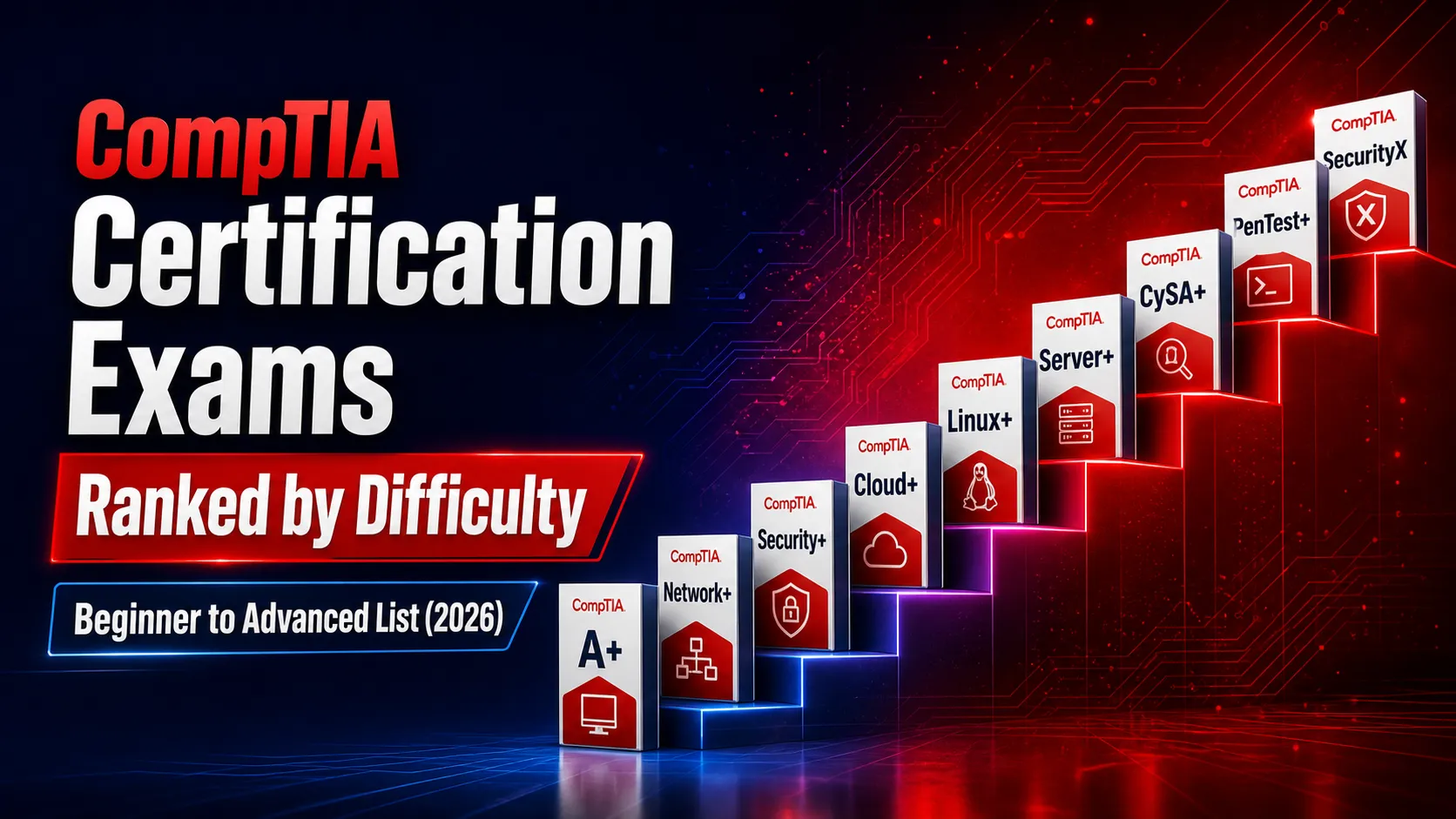
CompTIA Certification Exams Ranked by Difficulty: Beginner to Advanced List (2026)

CompTIA certifications are commonly used as a method of creating IT abilities. One of the reasons they are so well-known is that they follow a clearly defined progression that starts with basic skills and progressing to higher-level, real-world problems-solving jobs.In 2026, the candidates follow this pattern, however the difficulty of exams is higher due to the questions are more situation-based and focused on real-world problems rather than simple definitions. This article categorizes CompTIA tests from beginning to advanced, and explain what makes each level tougher.Understanding the CompTIA Structure FirstPrior to determining difficult, it is important to know the way CompTIA manages its certifications. The system is organized with layers in which each level builds upon the previous level.The major categories are:Certifications for CoreCertification of infrastructureCybersecurity certificationsCertifications at the expert or advanced levelThe most popular starting path is A+ → Network+ → Security+, often called the “CompTIA trifecta,” because these certifications build fundamental IT skills gradually. To better understand this structured path and explore available exams, you can also review detailed CompTIA certification options based on your career goals.Beginner Level: Entry Into ITThese certifications are among the easiest in terms of difficulty however, they require some work if you're novice to IT.IT Fundamentals or Tech+This is a good starting place for all novices. It is focused on the most the most basic IT terms, basic concepts and the ways technology operates. It was designed for those who have no technical knowledge.CompTIA A+A+ marks the initial serious certification for professionals. It covers software, hardware troubleshooting, operating systems and the basics of networking. A lot of IT career paths start here as it teaches practical skills for support.At this level, the difficulty arises from the variety of topics, not the technical complexity.Lower-Intermediate Level: Building Core SkillsAfter A+ the difficulty gets more difficult due to the fact that concepts become more complex and interconnected.CompTIA Network+Network+ concentrates on concepts of networking such as IP routing, addressing as well as switching, wireless networks and troubleshooting. It requires a deeper understanding of the way networks communicate.The exam is difficult because network concepts aren't always apparent. You must imagine the way data moves within the network.CompTIA Security+Security+ is among the most sought-after certifications. It provides cybersecurity-related concepts such as risks and vulnerabilities, risk management as well as access management. The challenge here is the type of questions that are based on scenarios. You need to choose the most effective security option, not simply determine a term.Intermediate Level: Specialized KnowledgeAt this stage, the tests are focused on specific roles like cloud computing, Linux as well as server-related management.CompTIA Cloud+Cloud+ evaluates cloud architecture the deployment process, its security as well as operations across different platforms. It is more practical and requires a deeper understanding of the real-world cloud environments.CompTIA Linux+Linux+ is a system-wide course that focuses on administration, command-line use as well as scripting, permissions and troubleshooting Linux environments. It's difficult for newbies due to the fact that it requires hands-on knowledge.CompTIA Server+Server+ is focused on server hardware deployment maintenance, and troubleshooting. It's useful in infrastructure roles and requires an understanding of both the software and hardware.As you progress, the exams get more difficult since you need to mix multiple skills rather than doing a single study.Upper-Intermediate Level: Cybersecurity and AnalysisThe certifications offered are sophisticated and geared towards practical security tasks in the real world.CompTIA CySA+CySA+ focuses on threat detection surveillance, management of vulnerabilities and response to incidents. It requires an analytical approach and a thorough understanding the security instruments.CompTIA PenTest+PenTest+ focuses on offensive security, which includes vulnerability scanning, penetration testing and ethical hacking strategies. It's tougher since it requires technical expertise and solving problems.At this point, the questions get more complicated. You must analyze the situation and make decisions instead of just finding solutions.Advanced Level: Expert CertificationCompTIA SecurityX (formerly CASP+)This is the top-level CompTIA certification. It focuses on security in the enterprise design, architecture as well as risk management. It also covers advanced troubleshooting.It doesn't test just skills. It tests the ability to make decisions at an expert level. Candidates are required to create secure environments and resolve complex security challenges. This isn't easy due to the fact that it requires actual expertise, not only studies.Difficulty Ranking TableCertification LevelExamsDifficultyWhy It Feels HardBeginnerITF+, A+Easy to ModerateBroad topics, fundamental conceptsCoreNetwork+, Security+ModerateTechnical depth and scenario-based questionsIntermediateCloud+, Linux+, Server+Moderate to HardIntegration of multiple skills and practical experienceAdvancedCySA+, PenTest+HardSecurity tools, analysis and real-world scenariosExpertSecurityX (CASP+)Very HardArchitecture, decision-making, enterprise securityThis concept is explained in greater depth in a YouTube video shared by Cert Empire.What Makes CompTIA Exams Hard in 2026The primary reason that these tests are more difficult now is due to the shift towards real-world situations. Instead of simply asking questions, the exams focus on business issues and demand the best solution from technology.The other reason lies in the expanding dimension of IT. Some of the introductory certifications today include cloud fundamentals, security awareness as well as hybrid systems. This adds to the amount of information required.Additionally, the performance-based questions create difficulty. These types of questions mimic real-life tasks, like setting up settings or solving issues.How to Choose the Right Starting PointSelecting the appropriate test level will save you time and cut down on difficulty.If you're new to IT Start by taking IT Fundamentals and A+. If you're already proficient in the basics of IT, you can start using Network+ or Security+. If you've worked in the field it is possible to move straight towards Cloud+, CySA+ or any other certifications that are specialized. The most important thing is to match your current level of knowledge to the level of the test. If you start too high, it will make the exam more difficult and can slow your advancement.Preparation Strategy Based on DifficultyFor exams for beginners, concentrate upon understanding basic concepts and the terminology. Practice with simple questions and basic tests.For exams for intermediate level, mix practical exercises with the theoretical knowledge. Learn about how systems interact and experience real-world scenarios.For more advanced exams, you should focus on decision-making and analysis. Review questions based on scenarios, practice mistakes and determine what makes one answer better over the other.Cert Empire is a great tool to use during revision when you need exam-style CompTIA questions that include explanations, particularly to understand how the questions are designed.Final VerdictCompTIA certificates follow a clearly defined course of study that goes from beginning to expert. The tests are not intended to fool you, however they require you to be able to comprehend.Exams for beginners test basic understanding. The core exams test the technical ability. Intermediate exams test combined skills. Advanced tests analyze test results. Expert exams test decision-making. Should you choose the correct method and work in a systematic manner each step, even the most difficult CompTIA certification is manageable.

J
Jack Lim
May 20, 2026 61 Reads

AI Governance Market: Responsible AI Adoption and Regulatory Oversight Are Driving Enterprise Demand

The AI Governance Market size was valued at USD 378 million in 2025 and is projected to reach USD 2.99 billion by 2032, registering a CAGR of 34.37% during 2026-2032, as per a study published by Vyansa Intelligence. The AI Governance Market forecast reflects rising enterprise demand for model monitoring, explainability tools, risk management frameworks, compliance systems, bias detection platforms, AI lifecycle management, and responsible AI implementation solutions.Artificial intelligence adoption is expanding across financial services, healthcare, manufacturing, retail, telecommunications, government, and enterprise software environments. As organizations deploy AI systems into operational and decision-making workflows, governance frameworks are becoming important for maintaining transparency, accountability, compliance, and model reliability.Regulatory Pressure Is Accelerating Governance AdoptionThe AI Governance Market growth outlook is closely linked with rising regulatory oversight surrounding artificial intelligence deployment.Governments and regulatory agencies are increasingly establishing frameworks focused on transparency, data usage, explainability, algorithmic accountability, cybersecurity, and human oversight.According to the European Commission, the EU AI Act establishes obligations for artificial intelligence systems based on risk categories, including stricter requirements for high-risk AI applications. This is increasing enterprise demand for governance software capable of documenting datasets, validating outputs, monitoring model behavior, and maintaining audit readiness.Organizations deploying AI in recruitment, financial analysis, healthcare support, fraud detection, insurance underwriting, and customer engagement increasingly require governance structures that can demonstrate operational accountability and compliance alignment.Software Platforms Lead Market AdoptionSoftware solutions account for 70% share in the AI Governance Market, making them the leading component segment. Their dominance reflects enterprise preference for centralized governance platforms that support model documentation, monitoring, explainability, policy management, bias testing, and risk assessment across multiple AI environments.AI governance software is increasingly integrated into broader enterprise technology stacks. Organizations are seeking tools that can monitor AI outputs continuously, detect anomalies, track data lineage, maintain model inventories, and provide governance visibility throughout the AI lifecycle.The AI Governance Market trends also show stronger movement toward automated governance systems capable of scaling across large AI deployments. As enterprises adopt multiple generative AI and predictive AI systems simultaneously, manual governance oversight becomes difficult to maintain.Cloud Deployment Continues to ExpandCloud deployment accounts for 60% share in the AI Governance Market. Cloud-based governance platforms are gaining traction because enterprises increasingly deploy AI workloads across hybrid and cloud-native environments. Cloud infrastructure also supports centralized model monitoring, distributed governance controls, and faster integration with enterprise data systems.The expansion of cloud-based AI development environments is strengthening the need for governance layers that can operate consistently across regions, business units, and AI applications. Governance platforms are therefore becoming closely linked with cloud security, data governance, identity management, and enterprise compliance architecture.Generative AI Is Increasing Governance ComplexityGenerative AI adoption is becoming one of the strongest drivers of the AI Governance Market forecast. Large language models, image-generation systems, enterprise copilots, automated coding tools, and AI-enabled knowledge assistants create governance concerns related to hallucinations, misinformation, intellectual property exposure, sensitive data leakage, and output reliability.According to the U.S. National Institute of Standards and Technology, trustworthy AI characteristics include validity, reliability, safety, security, resilience, explainability, privacy enhancement, fairness, accountability, and transparency. These principles are increasingly shaping enterprise AI governance frameworks and procurement standards.Organizations implementing generative AI tools are therefore investing in monitoring systems, usage policies, access controls, content filtering, audit trails, and explainability layers to reduce operational, legal, and reputational risks.Financial Services and Healthcare Remain High-Priority UsersHighly regulated industries remain among the strongest adopters of AI governance systems. Financial institutions use governance frameworks to monitor fraud-detection systems, credit scoring models, risk analytics, algorithmic trading support, anti-money laundering tools, and customer-facing AI applications.Healthcare organizations also require governance systems to manage clinical AI tools, diagnostic support models, patient-data sensitivity, medical documentation tools, and AI-assisted workflow automation. In both sectors, governance systems are increasingly viewed as operational controls rather than optional compliance tools.According to the World Economic Forum, AI governance is becoming essential for maintaining public trust, ensuring ethical AI deployment, and reducing unintended bias within automated systems. This is especially important where AI systems directly influence financial outcomes, healthcare decisions, employment processes, or public services.Bias Detection and Explainability Are Becoming Procurement PrioritiesExplainability is emerging as a core procurement requirement in the AI Governance Market. Enterprises increasingly need visibility into how AI systems generate recommendations, predictions, decisions, or content, particularly in regulated and customer-facing environments.Bias detection tools are also gaining importance because organizations face reputational, regulatory, and legal risks when AI systems generate discriminatory or inconsistent outcomes. Governance platforms that support fairness testing, dataset validation, model explainability, performance monitoring, and transparent reporting are becoming more commercially relevant.The AI Governance Market trends indicate that explainability is shifting from a technical feature toward a strategic compliance requirement. Organizations want governance systems that support both operational performance and external accountability.Cybersecurity and Data Governance Integration Is ExpandingAI governance is increasingly converging with cybersecurity and enterprise data governance. AI systems depend heavily on training data, access permissions, infrastructure security, and model deployment environments. Weak governance can increase exposure to data leakage, adversarial attacks, unauthorized model usage, model drift, and compliance violations.Organizations are moving toward unified governance architectures rather than isolated AI oversight tools. This convergence is strengthening demand for governance systems that integrate with cybersecurity platforms, identity management systems, data catalogs, model registries, and enterprise compliance workflows.Competitive Landscape Is Expanding RapidlyThe Vyansa Intelligence study lists Microsoft Corporation, Alphabet Inc., IBM Corporation, SAS Institute Inc., Salesforce Inc., Amazon Web Services Inc., Oracle Corporation, SAP SE, Informatica Inc., and FICO among companies covered in the market. The top five companies account for around 50% share, while more than 30 companies are active in AI governance-related solutions.Competition is increasingly shaped by explainability capability, integration flexibility, governance automation, cloud compatibility, compliance mapping, risk-scoring functionality, and enterprise-scale monitoring. Vendors that can combine governance transparency with scalable AI lifecycle management are better positioned as enterprises expand AI deployment across operational workflows.ConclusionThe AI Governance Market is being shaped by regulatory expansion, software-led adoption, cloud deployment growth, generative AI complexity, explainability requirements, and enterprise risk management priorities. The AI Governance Market growth pathway is increasingly tied to responsible AI implementation rather than AI deployment alone. Vyansa Intelligence positions this market within the broader transition toward accountable, transparent, and compliance-oriented artificial intelligence systems.

A
Adam Williamson